
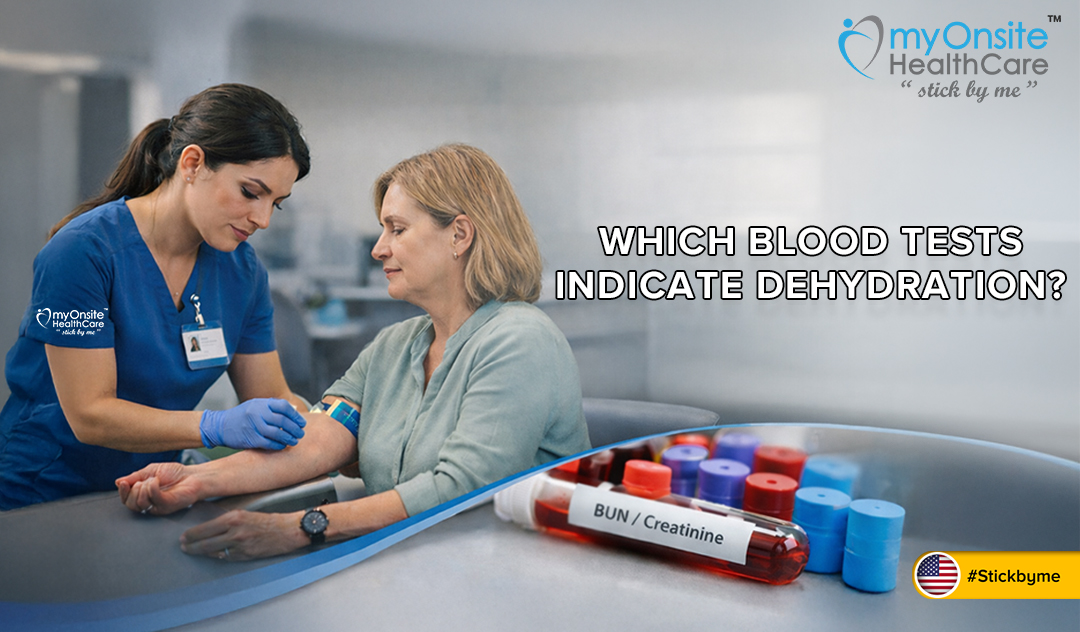
Ever had a blood test and heard, “Next time, drink more water”?
At myOnsite Healthcare, we hear this all the time. Patients are often surprised to learn that being even mildly dehydrated can impact the accuracy of your blood test results — sometimes just enough to raise concern. And while there’s no single “dehydration test,” your lab values do offer clues.
So here’s what actually matters: which blood tests point to dehydration, why it affects your results, and how to hydrate properly before a draw.
Is There a Blood Test That Detects Dehydration?
Not exactly. There’s no one lab called a “dehydration panel.”
But certain test results — especially when combined — can strongly suggest your body needs more fluids.
According to the National Institutes of Health, hydration plays a critical role in maintaining overall health and accurate biomarker assessment, especially in older adults.
Lab Markers That Point to Dehydration
BUN (Blood Urea Nitrogen)
Gets concentrated when there’s less plasma volume — often elevated when you’re dehydrated.
Creatinine
Measured with BUN to assess kidney function. On its own, not a hydration test — but together? Very telling.
BUN-to-Creatinine Ratio
A ratio above 20:1 usually points to dehydration.
Sodium
Elevated sodium is a classic sign that the body may be low on fluids. Especially important for older adults.
Hematocrit & Hemoglobin
Higher than normal levels can mean your blood is more concentrated.
Serum Osmolality
Measures how concentrated your blood is. High values = dehydration or fluid imbalance.
When multiple markers like these are elevated together, dehydration is a likely cause.
Why Dehydration Skews Results
In real-world testing, dehydration is one of the most common reasons labs need to be repeated.
Even mild dehydration can make your blood look “off.” It can:
- Mimic kidney issues
- Push borderline labs into the abnormal range
- Lead to unnecessary tests or concern
- Delay treatments or clinical trial steps
We’ve seen patients panic over slightly high results — only to repeat labs after hydrating and see everything back to normal.
Why This Matters for At-Home Blood Draws
For home blood draws, hydration makes a big difference.
At myOnsite Healthcare, our mobile phlebotomists notice immediately when patients are underhydrated. The draw takes longer, veins are harder to find, and results are more likely to be misleading.
That’s why hydration is one of the easiest ways to make your home blood draw smoother and more successful.
How to Prep: Hydration Tips That Actually Work
- Start the day before: 6–8 glasses of water spaced out
- Morning of your test: 1–2 glasses (unless fasting)
- Avoid alcohol the day before
- Limit caffeine — it’s a diuretic
- Check your pee: Pale yellow = well-hydrated. Dark = time to drink more
You don’t need to overdo it — no last-minute chugging. Just stay gently, consistently hydrated.
Can You Overhydrate Before a Blood Test?
Rarely, yes — but it’s hard to do.
Only excessive water in a short time will dilute your blood. For most people, underhydration is the bigger issue — especially if you’re fasting or live in a hot climate.
Frequently Asked Questions
What blood tests show dehydration?
+
Can dehydration make my lab results look abnormal?
+
Will I feel symptoms if I’m dehydrated before a blood test?
+
Can I drink water if I’m fasting for labs?
+
How much should I drink before a test?
+
What if I forget to hydrate — should I reschedule?
+
Can dehydration affect cholesterol or glucose levels?
+
Does hydration really affect how easy the blood draw is?
+
Can hydration prevent repeat testing?
+
Is dehydration more common in older adults?
+
Dehydration doesn’t show up as one simple result — but your labs give clues. And for patients getting tested at home with myOnsite Healthcare, staying hydrated is one of the best ways to help your provider get a clear, accurate picture of your health.
So drink water, draw confidently, and get results that truly reflect you.