
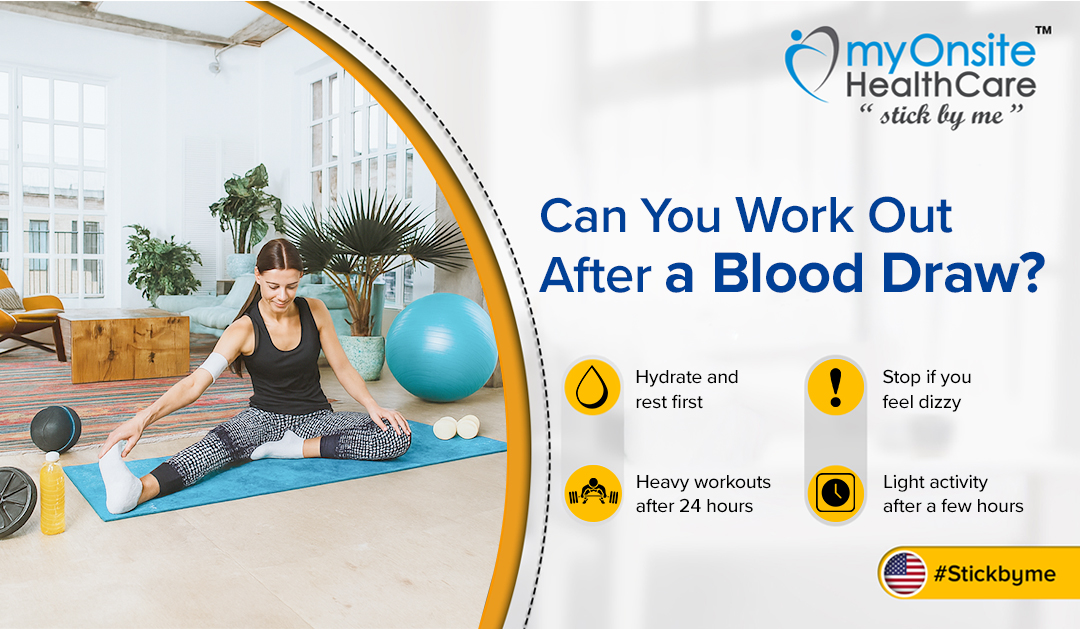
Ever had a blood test in the morning and a workout planned later — and wondered if you should cancel? You’re not alone. The good news: most people can get back to normal activity pretty quickly. The key is knowing what kind of exercise, how soon, and what your body is telling you.
And if your draw caused bruising or lingering arm symptoms, those are separate situations (we cover that in detail in Blood Draw Bruising: Causes & Care and Nerve Damage After a Blood Draw). This guide is purely about when it’s safe to work out again.
Let’s break it down.
What Happens to Your Body After a Blood Draw
A typical blood draw takes only a small amount of blood from a vein, usually in your arm. Your body recovers fast, but right after the draw you might notice:
- Lightheadedness (especially if you fasted)
- Mild bruising
- Slight bleeding if you move or lift too soon
These are normal, but they’re also why timing matters more than most people expect.
The Quick Timeline: When Exercise Is Usually Safe
0–2 Hours After Your Draw
- Skip the workout.
- Rest, hydrate, and eat something light.
2–6 Hours
- Light movement is okay: walking, casual yoga, or gentle stretching.
- Avoid putting pressure on the draw arm.
6–24 Hours
- Moderate exercise is fine if you feel okay.
- Think: cycling, a steady jog, lighter weights (not with the draw arm).
After 24 Hours
- Most folks are good to go with regular workouts.
- Heavy lifting is safest after this point.
What Counts as Light vs. Intense Exercise?
| Type | Examples |
| Light | Walking, gentle stretching, light yoga |
| Moderate | Steady jog, cycling, pilates, light dumbbells (off draw arm) |
| Intense | HIIT, CrossFit, heavy lifting, long-distance runs |
If your workout fits in the “intense” bucket, hold off until tomorrow.
Exercises to Avoid the Same Day
Even if you feel fine, skip these until the next day:
- Heavy lifting with the draw arm
- Pushups, pullups, biceps/triceps work
- Intense upper-body training
- Hot yoga or sauna sessions (heat can worsen dizziness)
When You Shouldn’t Exercise Yet
Listen to your body. Skip exercise if you have:
- Bleeding that starts again
- Dizziness or nausea
- Swelling or numbness in the arm
- Sharp pain or a growing lump at the draw site
If symptoms persist, call your provider.
Special Cases: Take Extra Care If…
- You fasted for the test: Eat and hydrate before moving much.
- You’re prone to low blood pressure or anemia: Rest for the full day.
- You had multiple vials drawn: Still routine, but more volume = more fatigue risk.
If you’re worried about fainting after draws, see Fainting During Blood Draws & How to Stop It.
Best Recovery Tips Before Working Out
- Hydrate right away: Water or an electrolyte drink helps.
- Eat a light snack: Carbs + protein work well, especially if you fasted.
- Keep the bandage on for 1–2 hours.
For food ideas, check What to Eat After a Blood Draw.
Why This Matters for Active Patients & Trial Participants
Physical activity — especially high-intensity or endurance training — can significantly alter plasma volume, hemoglobin levels, and lab values. These effects are well-documented in clinical laboratory studies on exercise physiology, which is why it’s smart to wait before jumping back into intense workouts after a blood draw — especially for people in clinical trials or managing chronic health conditions at home.